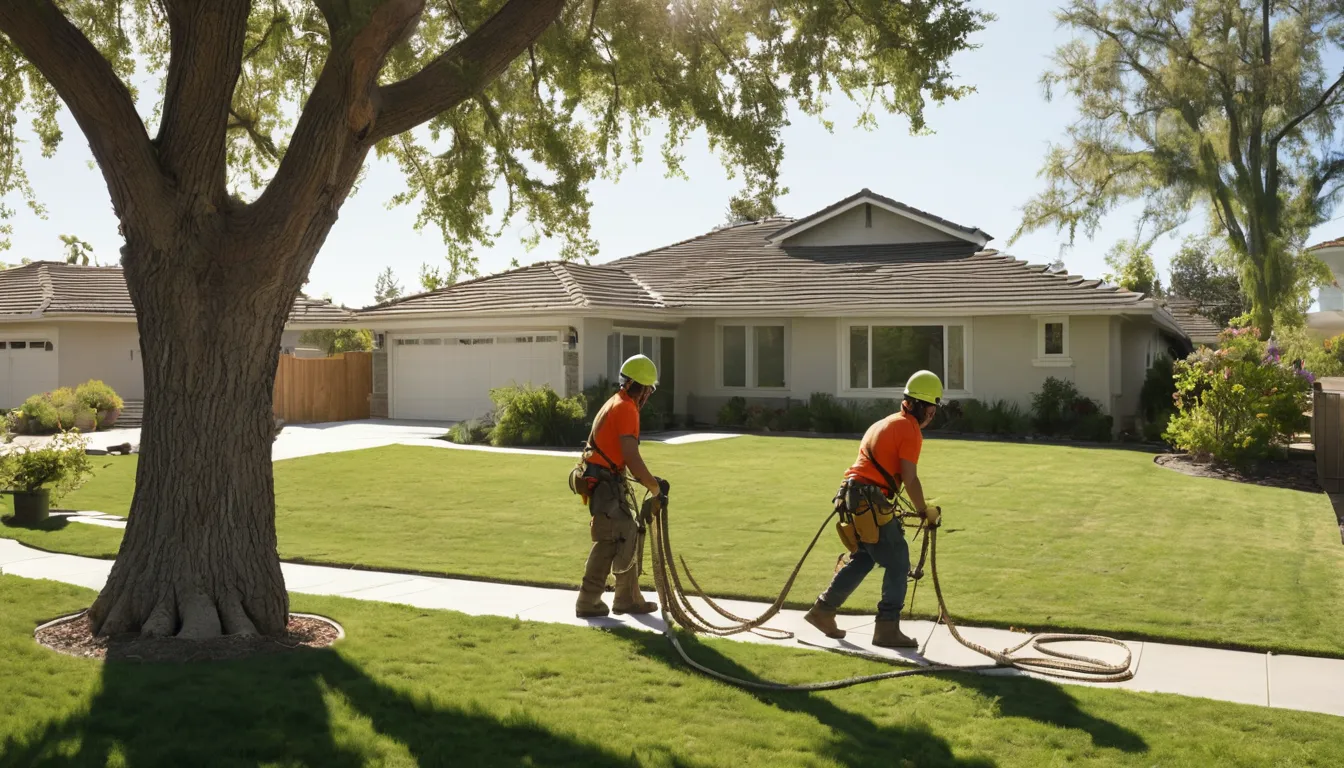
Tree Removal
Learn what tree removal involves, what shapes the price, and how to compare quotes from independent local providers.
Tree Removal Help for San Jose and the San Jose area
Never hired a tree provider before? Start here. Concreterice Tree Service explains what affects the price, then connects you with independent providers in the San Jose area for tree removal, stump grinding and storm cleanup. Compare written quotes and choose what fits.
Most requests fall into three groups. Pick the one closest to your situation, and a provider can help you sort out the details. If you are not sure which fits, describe what you see and ask for guidance.
Learn what tree removal involves, what shapes the price, and how to compare quotes from independent local providers.
Get a plain-English guide to stump grinding, what it costs, and how to plan it around your week.
A fallen or dangerous tree is stressful, and a clear plan helps you act safely and spend wisely.
Tell us about your tree and request an estimate. Independent providers in the San Jose area can follow up, and there is no obligation to hire.
No obligationPlain explanations of what tree removal involves, what affects the price and which questions to ask, so you can choose with confidence.
Independent providers set their own prices, so you can request more than one written quote and see what each includes.
Share your schedule and access details up front so the provider can plan around school runs, work and daily life.
Concreterice Tree Service is a referral service. Independent providers do the work, and you decide with no obligation to hire.
Tell us about the tree and your timing through the simple online form.
Independent providers in our network review the details and reach out about a visit.
Line up scope, cleanup and price, and ask questions before you commit.
Pick the provider and a time that fits your household, then prepare the site.
Taking down a tree is a big decision, and most people only face it once or twice. If this is your first time, the questions pile up fast. Who can work safely near my roof? What should it cost? Do I need to be home?
Concreterice Tree Service is a referral service. Concreterice Tree Service does not cut, haul or grind anything. It connects homeowners in San Jose and the San Jose area with independent local providers who do the work. You describe the tree, and a provider in our network follows up.
Think of it as a planning step. You describe the job, compare what providers say, and pick the one that fits your budget and your calendar. There is no obligation to hire anyone.
This page covers the basics: how removal works, when stump grinding makes sense, what to do after a storm drops a limb or a whole tree, and how to keep the work from taking over your week.
Ready to begin? Request an estimate and share a few details about the tree. It takes a few minutes, and you can ask questions before you decide anything.
Prefer to talk it through? Request a callback to check provider availability for your street.
Concreterice Tree Service sits between you and the people who do the work. You send a request. A local provider in our network reviews it and gets in touch. The provider sets the price, the schedule and the terms, not Concreterice Tree Service.
That setup has one big benefit for a budget-minded homeowner. You are not locked into a single price. You can ask more than one provider, then compare what each one includes.
Tree work is priced by risk and effort, not just size. In the U.S., a small, easy tree can cost a few hundred dollars. A tall tree over a house or near wires can run well into the thousands. Prices vary by job, so a written quote matters more than any average.
The usual cost drivers are height, trunk width, access for equipment, how close the tree is to buildings, and whether the wood and brush must be hauled away.
A written quote lists the scope. It should say whether cleanup, wood removal and stump work are included. When two quotes differ, the scope is often the reason.
Concreterice Tree Service focuses on San Jose and the San Jose area. Homes here vary a lot. You will find stucco ranch houses on slabs or raised foundations, older bungalows with mature trees close to the walls, and many tract homes from the middle of the last century with trees that have had decades to grow.
That mix matters for planning. A tree beside a slab foundation can lift paving or crowd plumbing lines. A big tree near an older bungalow may need careful rigging so limbs do not land on the roof. A tight tract-home yard can limit where equipment fits, and access often changes the price.
The local climate adds its own twist. Long dry seasons can stress trees and leave deadwood overhead. Winter rain events can loosen soil and send weak limbs down. Smoke seasons can make outdoor work unpleasant, so some households prefer to schedule around them.
If you live in or near San Jose, send a request with your street area and a few details about the tree. A provider in our network can tell you whether they cover your neighborhood.
Not sure whether your area is covered? Request a callback to check provider availability.
Decide what you want before you ask for quotes. Do you need the whole tree gone, or only a hazardous limb? Do you want the stump ground down too? A clear goal makes quotes easier to compare.
Dead branches, cracks in the trunk, leaning that is new, mushrooms at the base and roots lifting soil are all worth attention. None of these proves a tree must come down, but a provider can tell you what they see.
Some cities and neighborhoods have rules for larger or protected trees. Ask the provider whether a permit applies, and check with your local city office or homeowner association if you are unsure.
Busy family? Tell the provider your schedule. Ask about the expected time on site, where the truck will park, and whether you need to move cars, toys or patio furniture. Pets and children should stay indoors while the work is under way.
Good questions to ask:
If a tree or limb falls on your home, car or fence, keep everyone away from it and stay clear of any wires. Storm tree clearance and emergency tree removal are often priced higher because of the urgency and risk. Take photos for your records. Some policies may cover sudden damage, so check your policy, and providers can often help document damage for a claim.
A stump left behind can attract pests and trip people up. Grinding reduces it below ground level. Ask how deep the grinding goes and what happens to the chips.
Long dry spells can make ground access easier, while winter rain can leave yards soft and prone to rutting. Ask the provider how weather might affect your date.
The easiest way to start is the request form. Tell us what the tree looks like, where it stands and what worries you. An independent provider in our network can then follow up with questions and a written quote.
There is no obligation, and you can compare more than one provider.
If you would rather speak with someone, Request a callback to check provider availability in your area.
In the U.S., a small, easy tree may cost a few hundred dollars, while a tall tree near a house or power lines can cost much more. Height, access, trunk size and cleanup all matter. Prices vary by job, so ask for a written quote from each provider and compare what is included.
It depends on where you live and the tree. Some cities and homeowner associations regulate larger or protected trees. Ask the provider what applies, and check with your local city office if you are unsure. Doing so before work starts can save you trouble.
Not always. Many providers price stump grinding separately, so ask whether it is in the quote. Some may offer a package price for both jobs. Getting the answer in writing helps you compare quotes fairly.
Keep everyone away, and stay clear of any wires. Take photos, then ask a provider about emergency tree removal or storm tree clearance.
Some policies may cover sudden damage, such as a tree falling on your home, but coverage varies. Check your policy or ask your insurer. Providers can often help document the damage for a claim. Routine removal of a healthy or dead tree is often not covered.